
Mother Led, Child Powered
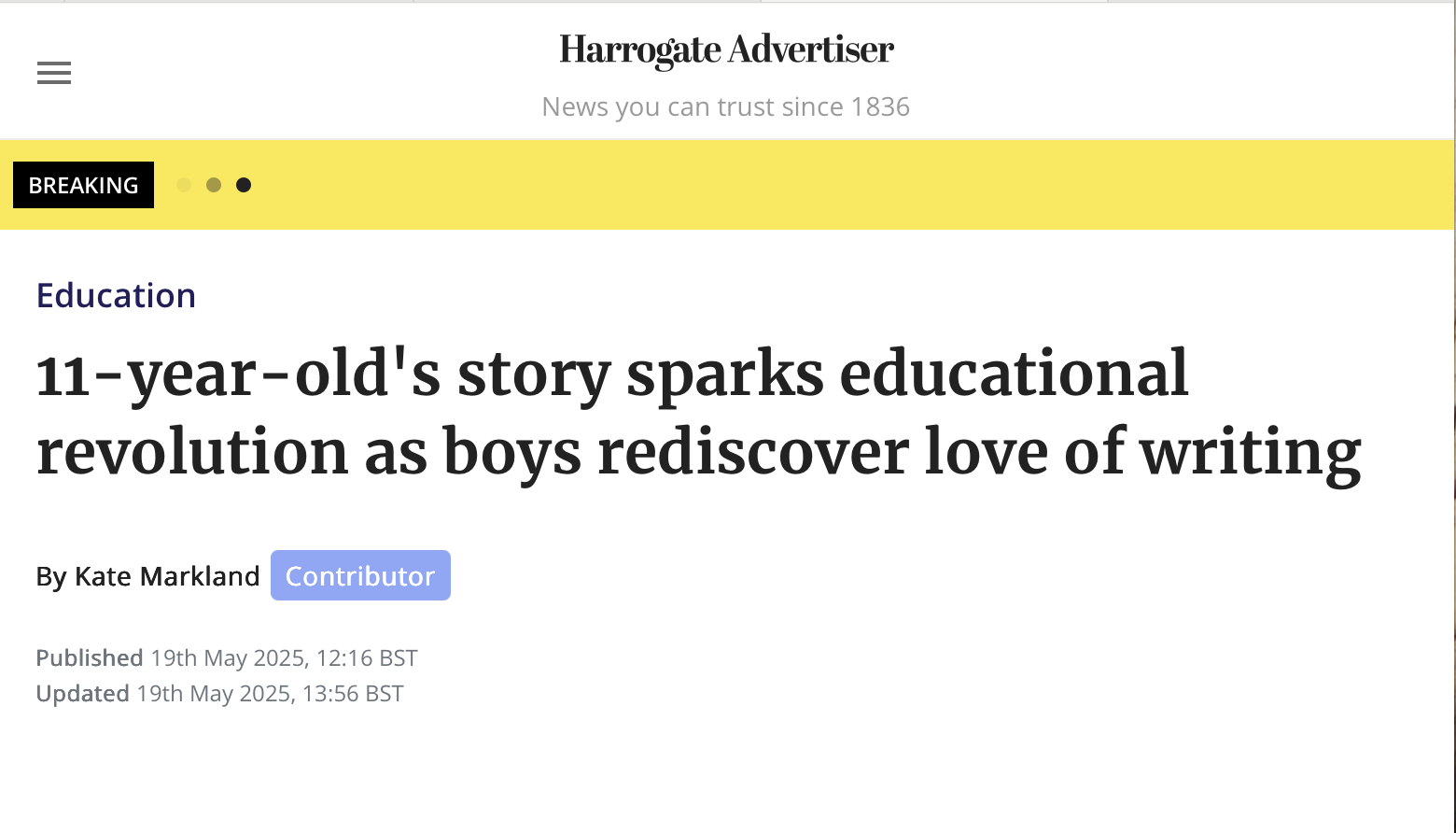
CHELTENHAM —A Cheltenham lad and his spirited platypus sidekick are inspiring a storytelling revolution, proving that every child can be the hero of their own tale. The Adventures of Gabriel, co-authored by 11-year-old Gabriel Khan and his mother, Kate Markland, has captivated young readers with its blend of courage, creativity, and a lot of heart.
Now, the duo is set to light up the Children’s Literature with the launch of their second book, Gabriel and the Chronicles of Coral Cove, and a vibrant adventure journal, showcasing how stories, written, spoken, or drawn can transform lives.
A Local Hero’s Tale
Gabriel Khan, a Cheltenham-born dreamer, and his platypus pal, Platy, first leapt from the pages of their book into the imaginations of children through The Adventures of Gabriel. This vibrant tale follows the duo as they discover forgotten islands, face fearsome creatures like the sea-monster Tentaculus and go on a quest to discover a gold phoenix. With a 32-page coloring book bringing their escapades to life, the story teaches children aged 8–12 that mistakes are okay, instincts can guide you, and true bravery comes from being yourself.
What makes this adventure extra special? It’s deeply personal. Inspired by a challenging situation that tested their resilience, Gabriel and Kate poured their hearts into creating a story that resonates with families. “Seeing Gabriel find his voice through his and Platy’s adventures was magical,” Kate says. “It sparked something bigger, a movement to empower other children to tell their story.”
From Cheltenham to Bradford and Beyond
The story’s roots stretch from Cheltenham to Bradford, where Gabriel’s grandmother hails from, and where The Adventures of Bradford has taken flight. This initiative in Bradford, UK City of Culture 2025, is empowering over 1,200 children across schools to become authors.
Through Kate’s neuroscience-informed StoryQuest™ workshops, children craft tales of fire-breathing dragons, time-traveling bots, and, yes, platypuses and spies, learning to process emotions and build confidence.
In Bradford classrooms, reluctant writers have transformed into eager storytellers. One Year 6 student described a character as “Maximus, who was ginormous, looming over the horizon,” unprompted and bursting with pride. “I believed in myself and created things I didn’t even know I could do,” another said.
A Spotlight on Success
The initiative’s impact has been featured in the Yorkshire Post for empowering young voices, on Times Radio at Cheltenham Literature Festival 2024 for its innovative approach, and in Canadian Teacher Magazine for its educational impact. The British Psychological Society (Jan 2025) and Journal of Novel Physiotherapy and Rehabilitation (Nov 2024) have praised its neuroscience-informed methods, while a workshop booked at Bradford’s National Science and Media Museum and support from Bradford MPs highlight its cultural significance.
Kate’s upcoming presentation at the European Conference on Education (Summer 2025) will share this model globally, positioning Gabriel and Platy as ambassadors for change.
Tackling Educational Challenges: Key Facts
Confronting critical issues in literacy, oracy, and boys’ engagement, offering creative solutions to persistent challenges in traditional classroom settings.
Literacy Struggles: In the UK, 20% of children leave primary school below expected reading and writing levels, with boys trailing girls by 10% in writing due to rigid curricula stifling creativity.
Oracy Gaps: One in four children struggles with oral communication, with boys scoring 30% lower than girls in verbal expression, limiting idea-sharing and relationships.
Boys’ Disengagement: Boys are twice as likely to disengage from literacy, with 40% of Year 5–6 boys calling writing “boring” without creative freedom.
Emotional Barriers: Low literacy and oracy skills fuel emotional isolation, with 1 in 3 boys reluctant to share feelings in traditional settings.
Teachers Marvel
“Writing’s tough for some boys, but today, they didn’t want to stop, They asked to do it again tomorrow. We’ve never seen that before.”
90% of students completed their own narratives.
Why It Inspires
- The Adventures of Gabriel isn’t just a story—it’s a call to action. By giving children a safe space to express themselves, Kate, Gabriel, and their team are tackling big issues like Adverse Childhood Experiences (ACEs).
- The workshops create emotional literacy, resilience, and community pride, and are inclusive for children with SEND and SEMH needs. “Storytelling is the fastest way to protect a child,” says Kate, whose 20-year career as a physiotherapist shaped her belief in the healing power of being heard
- Each school creates its own book, The Adventures of [School Name], top stories will be featured in a citywide anthology. Optional book launches unite families, and local press amplifies the buzz, creating a legacy that will echo in Bradford’s curriculum.
- As one Year 5 student put it, “The only superpower you need is imagination.”
A game-changer
The Adventures of Bradford saw boys lead the charge sharing personal stories.
Creative storytelling increased participation rates in pilot sessions.
StoryQuest™ workshops foster natural narrative structure, improving confidence.
Bradford workshops, saw children bounce ideas off each other boosting oracy engagement.
A New Chapter: Gabriel and the Chronicles of Coral Cove
Hot off the press, Gabriel and the Chronicles of Coral Cove takes readers deeper into the magical world of Coral Cove, where Gabriel and Platy face new mysteries, unravel ancient secrets, and team up with unexpected allies.
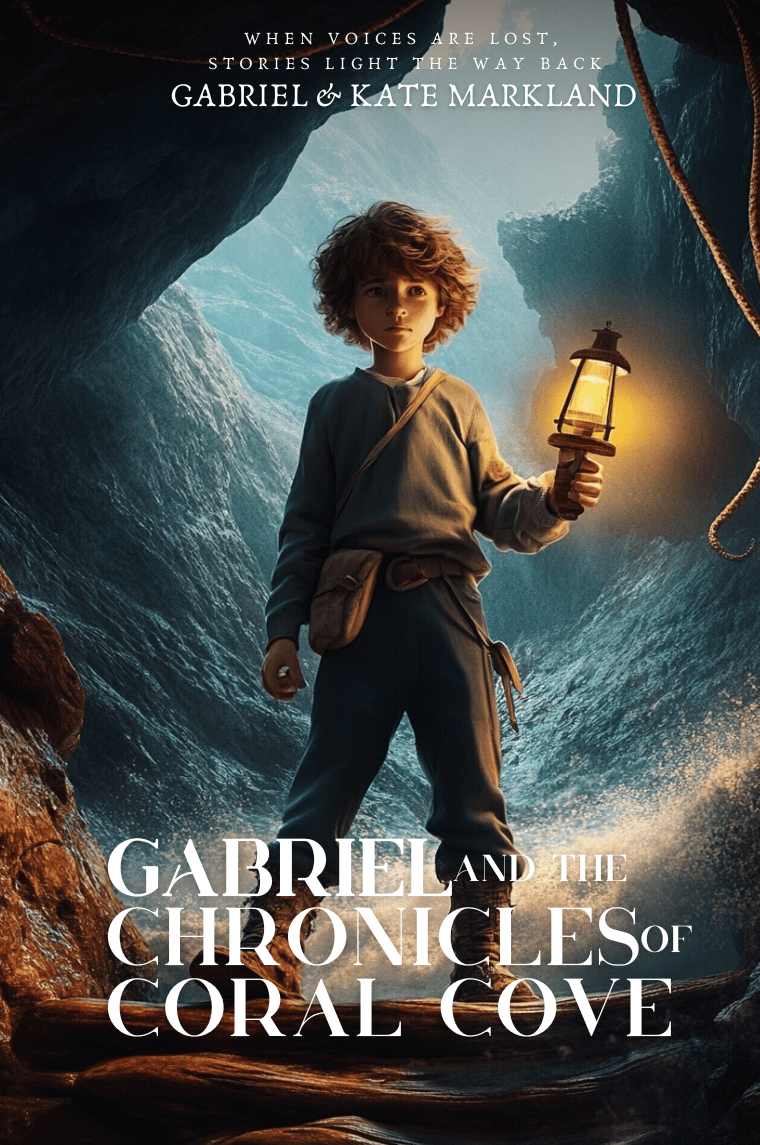
This thrilling sequel introduces even more fantastical creatures and clever plot twists, all while reinforcing the power of teamwork and imagination.
“It’s bigger, bolder, and full of surprises,” Gabriel teases, hinting at a scene where Platy’s quick thinking saves the day against a shadowy foe.
The book is supported by a special adventure journal, a beautifully designed companion that invites young readers to pen their own stories, sketch their heroes, and map out epic quests.
Packed with prompts inspired by Coral Cove’s landscapes and Platy’s antics, the journal encourages children to channel their creativity and build confidence as authors.
It’s like having Platy an his can do spirt by your side” says Kate, who hopes the books and journal will spark a lifelong love of storytelling whether oral, written or drawn.
“Children can be heroes of their own stories,” says Gabriel.



Responses